SGT
SRT – Sardinia Radio Telescope
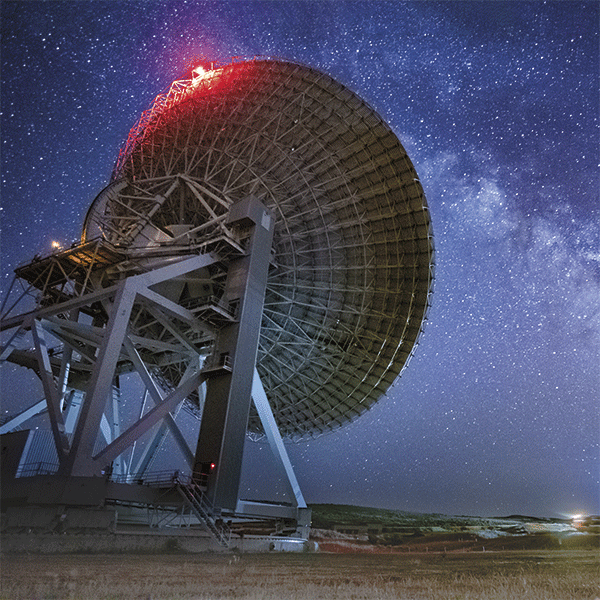
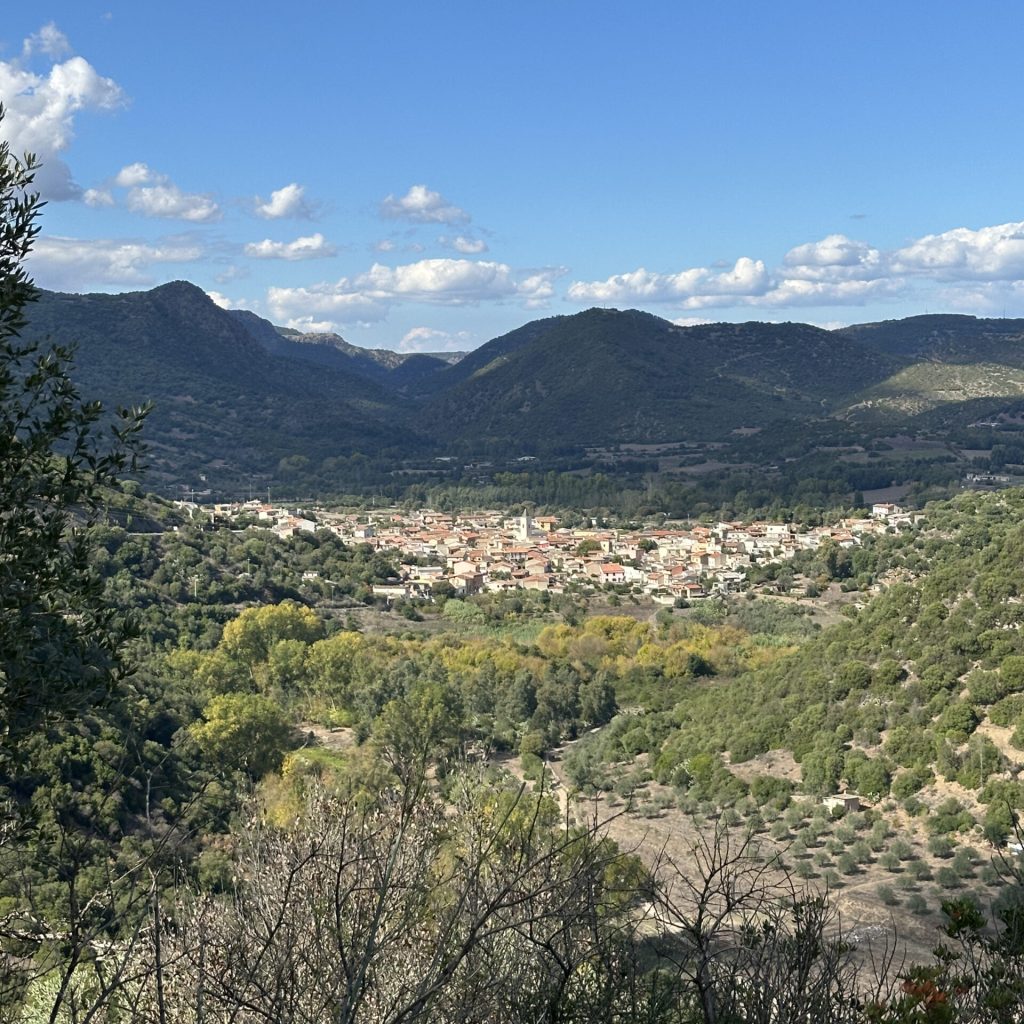
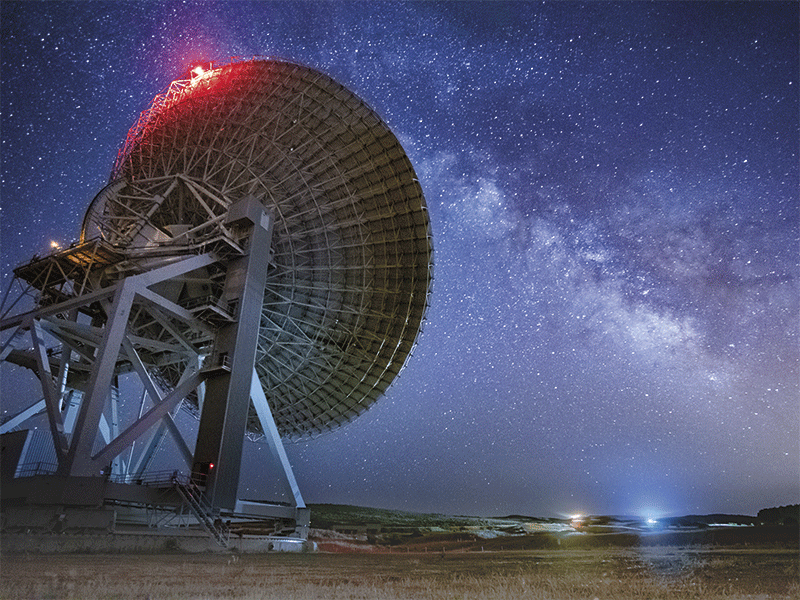
Among the silent hills of Pranu ‘e Sànguni, in the territory of San Basilio, lies the Sardinia Radio Telescope (SRT), one of the most advanced scientific instruments in Europe: a technological giant capable of listening to the universe.
Inaugurated in 2013, the SRT is a massive 64-metre-diameter parabolic antenna designed to detect not light, but radio waves emitted by stars, galaxies, black holes, and other celestial objects. Its construction is the result of collaboration between the National Institute for Astrophysics (INAF) and the Italian Space Agency (ASI). San Basilio was chosen precisely for its “radio silence”, an essential condition for detecting even the weakest signals coming from deep space.
Thanks to its dish made up of many movable panels, the SRT adapts to different observations with extremely high precision. It is used to study nebulae, distant galaxies, the movements of the Earth and participates in the SETI project for the search for extraterrestrial life. Under the acronym SDSA (Sardinia Deep Space Antenna), it is also part of NASA’s Deep Space Network, contributing to communications with interplanetary probes, monitoring satellites and space debris, and supporting future missions to the Moon and Mars. The SRT is also a centre for scientific outreach, where students and enthusiasts can discover one of the most fascinating windows on the cosmos. For several years it has been one of the stops on the Gerrei Astrofest, the festival that celebrates the importance of astronomical research through educational workshops and seminars.
Sacred Well of Bau Crabas
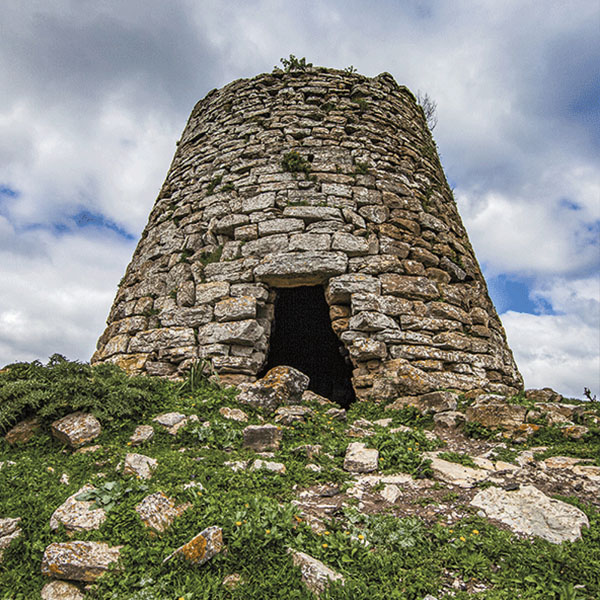
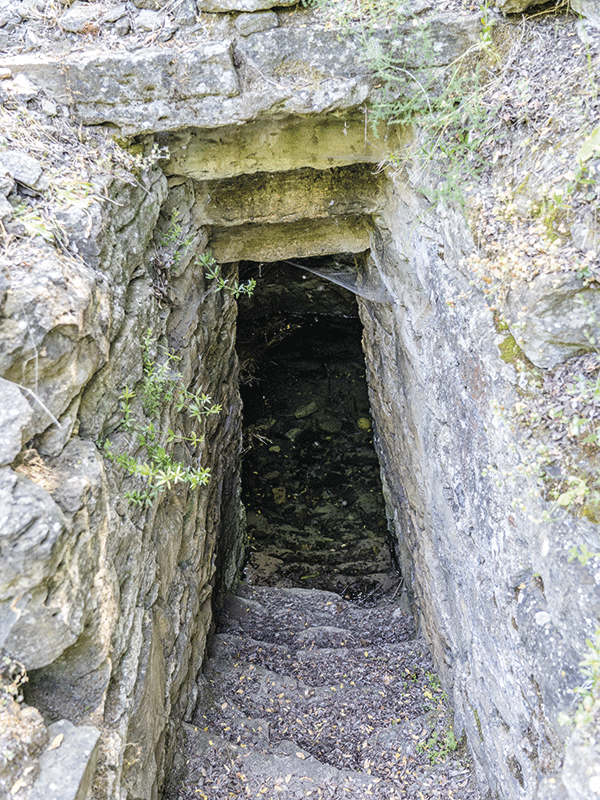
In the countryside of San Basilio, in the Su Lillu-Rio Canneddu area, a suggestive example of sacred Nuragic architecture is preserved: the sacred well of Bau Crabas. Built between 1200 and 900 BC, in the final phase of the Bronze Age, it testifies to the importance of the cult of water for the Nuragic communities. Built with sandstone blocks processed and laid dry, the well consists of a cylindrical underground chamber covered by a tholos vault, three metres deep and with an internal diameter of approximately two metres. It is accessed via a staircase of sixteen steps, some of which are still buried. The perfectly preserved staircase is covered with large slabs arranged in inverted steps, according to a technique typical of sacred Nuragic monuments. The entrance, facing south, is framed by what remains of the exedra. Not far away, near the Rio Cardaxius, there is a second well known as Bau Crabas I, almost completely buried and not yet investigated. The proximity suggests the existence of a real cult centre linked to water, frequented by an entire community.
Roman Baths and Romanesque Church of San Basilio
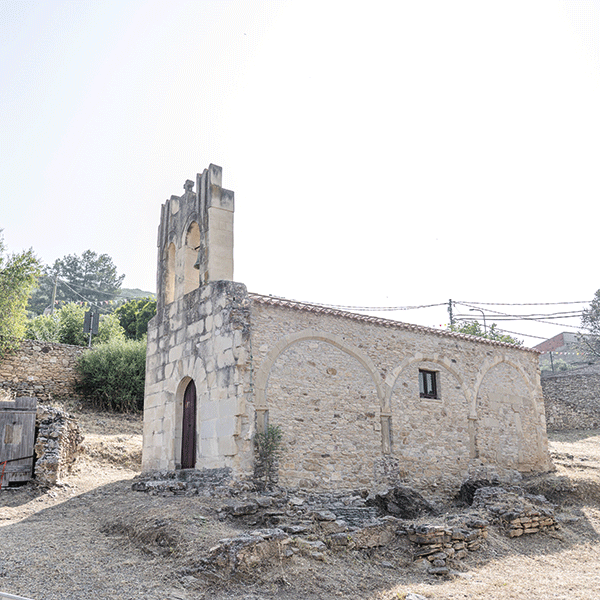
In the San Basilio area, the remains of a Roman thermal complex dating back to the 2nd century AD are preserved. The baths, built taking advantage of the natural slope of the land, feature rooms with pools, cisterns, and channels to collect and distribute water. In one of the rooms, a fresco with a starry sky and a human figure is still visible, likely dating back to a reuse in the Byzantine era. With the arrival of Byzantine monks around the 6th century, the baths were repurposed: the cisterns became living cells and the thermal spaces became places of prayer and meditation. The first inhabited nucleus was born around this settlement, called Sanctu Basil de Montis in medieval times. In the Middle Ages, a Romanesque church dedicated to Saint Basil the Great, the bishop after whom the Greek-Byzantine monks had named their settlement, was built on the ruins of the baths. The church originally had two naves and today only the left one remains. For centuries it was the parish and cemetery of the town, a spiritual point of reference for the entire community. Still today, in the month of June, religious celebrations enliven the festival in honour of Saint Basil.