SGT
Monte Lora - The Sleeping Beauty
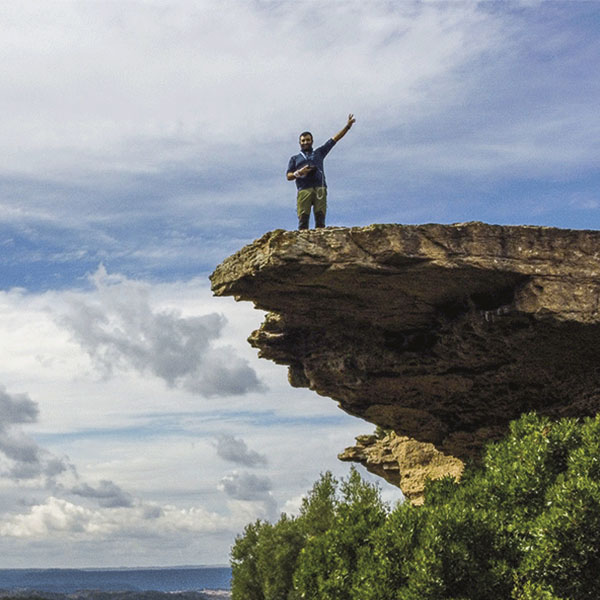
In the wild heart of Sarrabus, between the territories of San Vito and Villasalto, rises Monte Lora: a 593-metre-high limestone massif, one of the most evocative natural wonders of south-eastern Sardinia. Its unmistakable shape is the result of the superposition of rock walls seen in perspective. Anyone who observes it from afar immediately recognises a female figure lying down, as if asleep. For this reason, Monte Lora is known as the “Sleeping Beauty” or even “The Sphinx”, and has inspired timeless legends. It is said, for example, that Noah’s Ark ran aground right on its summit, tied to an enormous golden ring hidden in the rock. Others speak of hermit monks or of a witch who inhabited the mountain. Another legend tells of a landslide, confirmed by geological studies, that swept away a sheepfold: shepherds and flocks disappeared, and the sound of the blowing wind is said to be the eternal cry of the survivors. Monte Lora is a true treasure trove of biodiversity: its slopes are home to holm oak and evergreen oak forests, and the summit is dotted with Mediterranean maquis and garrigue. The hiking trails offer spectacular views of the Flumendosa valley and the Sarrabus coast. Frequented since the Nuragic age, today it is the symbol of San Vito, a stone sentinel that still enchants. Just stop at km 80 of the SS 387, and from the side lay-by the Sleeping Beauty reveals itself in all its majestic beauty.
The launeddas and Maestro Luigi Lai
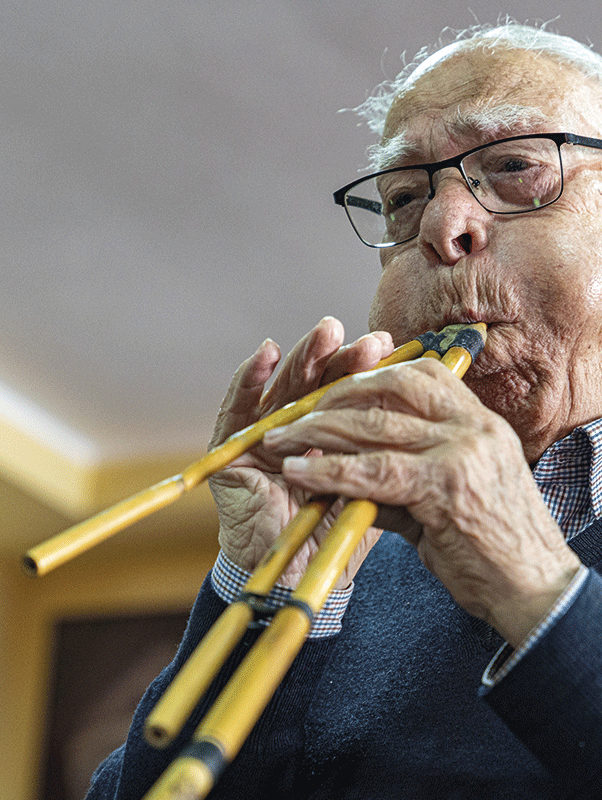
In Sardinia, there is no celebration without the unmistakable sound of the launeddas, a polyphonic wind instrument composed of three pipes of different lengths. Using the circular breathing technique, players can produce uninterrupted sounds, creating hypnotic melodies. In San Vito, this instrument, whose origins are lost in the millennia—some scholars date it back to the Nuragic era—lives on thanks to Luigi Lai, born in 1932, one of the greatest interpreters and custodians of this tradition. In the 1970s he founded the first launeddas school, to pass on what he had learned from great masters such as Antonio Lara and Efisio Melis of Villaputzu. Since then he has played in Sardinia and around the world, collaborating with artists such as Branduardi and Fresu. He was awarded numerous honours, including the title of Knight and then Officer of the Republic.
In 2023 he received an Honorary Degree from the University of Bologna, the first musician of oral tradition to obtain such recognition. Today he teaches at Cagliari Conservatory in the only academic launeddas course offered by the MIUR. His biography, Luigi Lai, Maestro di Launeddas, recounts a life of sounds, dedication, and love for his homeland.
Tziu Antoni Cuccu
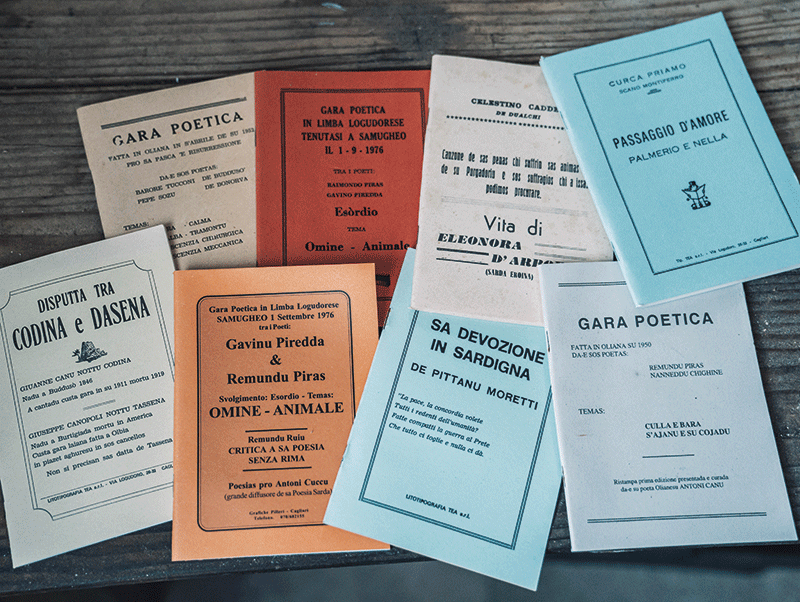
A symbolic figure of Sardinian culture and language, Tziu Antoni Cuccu was born in San Vito in 1921. Since the 1960s he devoted himself to collecting and publishing the verses of Sardinian improvisers, sensing the value of an oral heritage that was at risk of oblivion. Back to Sardinia after a period abroad, he began attending folk festivals and celebrations throughout the island with a tape recorder or pen and paper: he would transcribe the improvised poems and then print them at his own expense in small booklets.
He didn’t do it for money, but for the love of the Sardinian language. “If I don’t do it, who will?” he often said. With an old Panda loaded with books and a white sheet spread out on the ground, Tziu Antoni became a familiar presence at village festivals. Passed away in 2003, many remember him fondly. In 2021, one hundred years after his birth, a plaque was placed at his birthplace. Poets, musicians, and launeddas players paid homage to him in a well-attended and heartfelt event. Thanks to Tziu Antoni’s efforts, improvised poetry in the Sardinian language has found space and recognition, becoming an integral part of collective memory.