SGT
Pranu Trebini, the city of rock
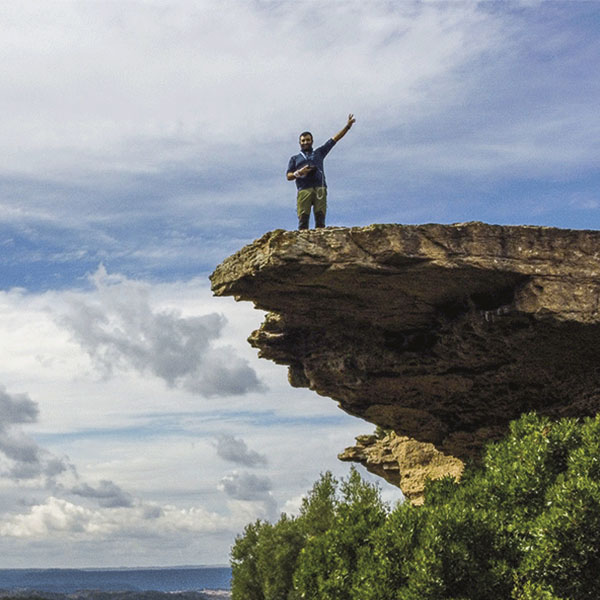
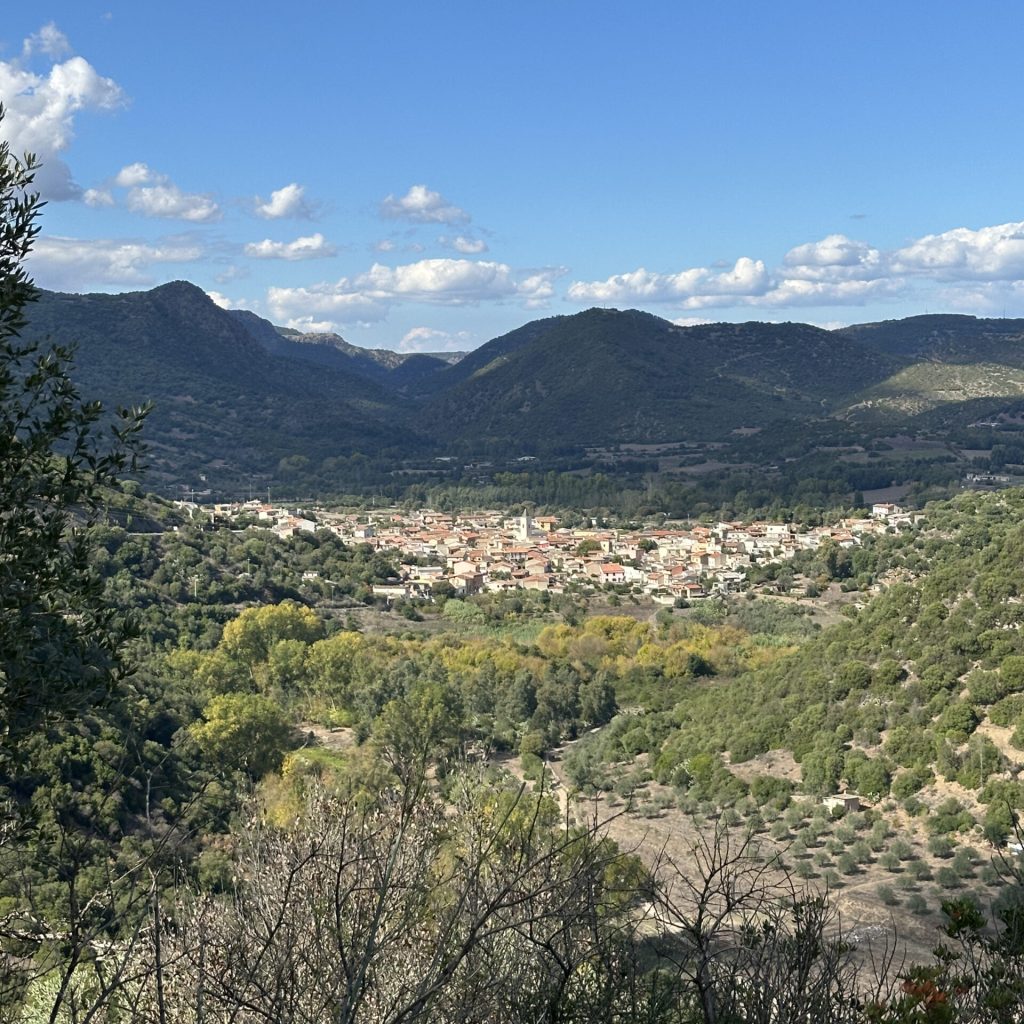
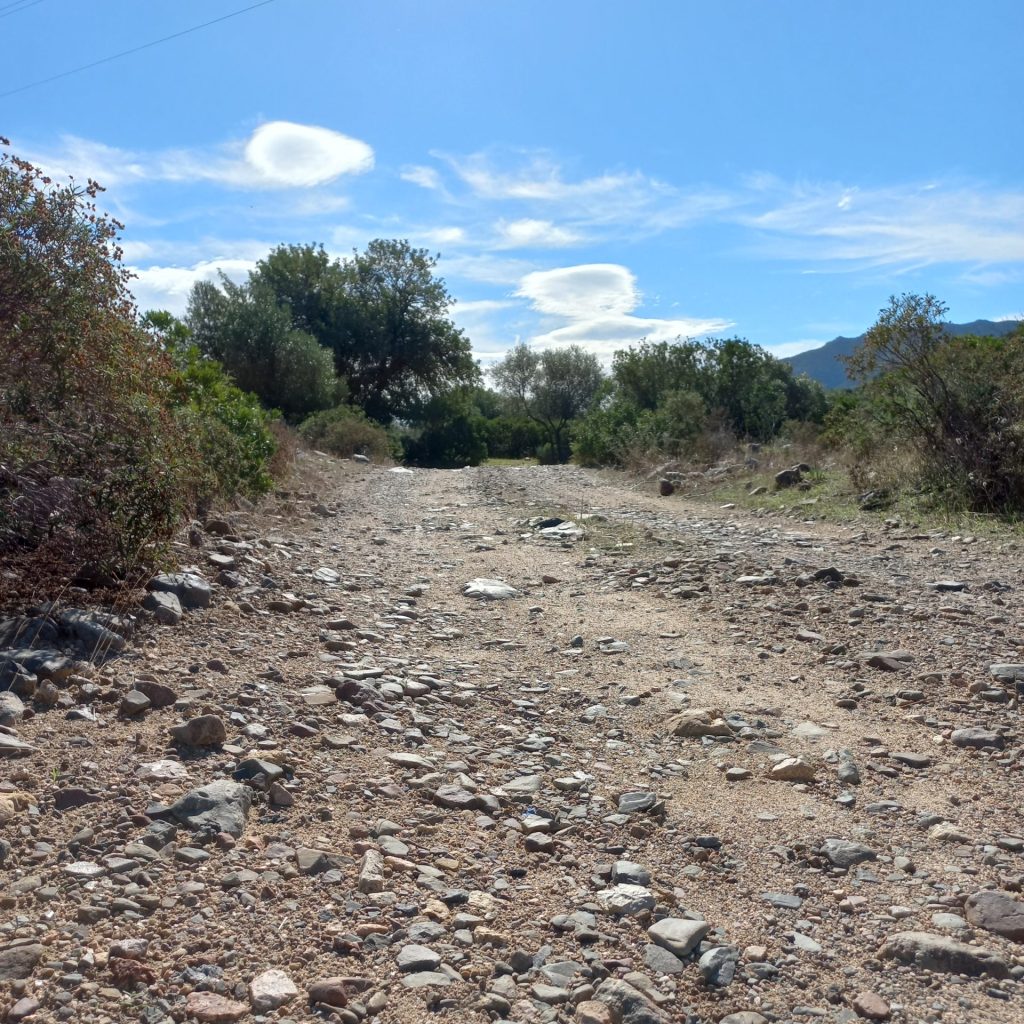
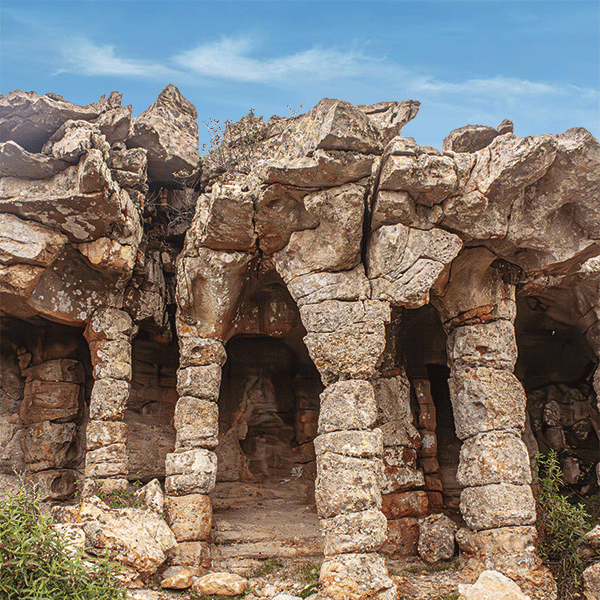
In the Villaputzu area, south of the Salto di Quirra plateau, lies the natural monument of Pranu Trebini, also known as the City of Rock or City of Stone. This is an extraordinary geological formation hidden in a narrow, deep valley, extending for about 400 metres in a still wild and rarely visited environment. The rocks, belonging to the Monte Cardiga Formation, are composed of limestone, sandstone, and conglomerates of Eocene origin, shaped over the centuries into surprising forms: the overall appearance of the site resembles a city dug into the stone, with pillars and columns emerging from the ground. In the background, the ruins of the mining village of Baccu Locci, active since the 18th century and in production until 1965 for the extraction of arsenopyrite, still preserves evidence of its industrial past, such as the washery, the dam on the Rio Mummosa, and numerous abandoned structures. Pranu Trebini is a place of great geological, landscape, and naturalistic importance, where Mediterranean vegetation blends with rocky forms in a surprising visual balance, which changes with the light and the seasons. The trails, though challenging, offer spectacular views of the canyons of the Baccu Locci River and panoramas that open up as far as Quirra Castle and the coast.
Murtas and S'Acqua Durci ponds and mouth of the Flumendosa Sa Praia
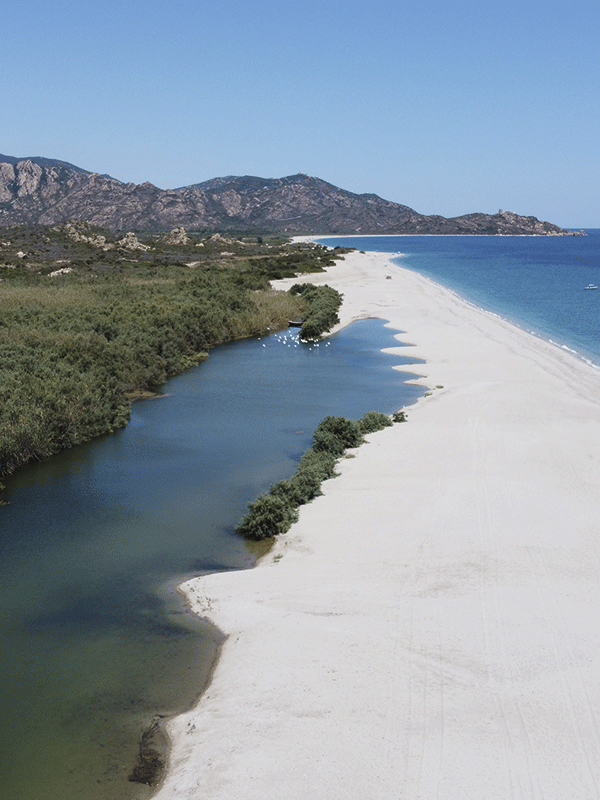
Between the territories of Muravera and Villaputzu, along the southeastern coast of Sardinia, lies a natural area of extraordinary environmental value that includes the Murtas pond, the S’Acqua Durci pond and the mouth of the Flumendosa. The latter, now a Special Area of Conservation (SAC), represents one of the most interesting coastal stretches in the Mediterranean. The Flumendosa, Sardinia’s second longest river, flows through a diverse landscape before flowing into the sea, shaping a landscape of canals, bodies of water, sandy beaches, and ponds. At the mouth, the complex river dynamics have created a wetland of approximately 700 hectares, rich in biodiversity and an ideal habitat for birdlife. The Sa Praia pond, near Porto Corallo beach, is fed by the Gironi stream and extends between granite outcrops and alluvial terraces, isolated from the sea. Further north, near the spectacular Murtas beach, are the Quirra and S’Acqua Durci ponds, immersed in an unspoiled landscape, rarely visited due to the proximity to the military polygon. Once larger, these basins are now a refuge for numerous bird species, including flamingos, herons, black-winged stilts, and marsh harriers. The clear waters and the silence, broken only by birdsong, make these places ideal for nature observation.
The Masters of Launeddas
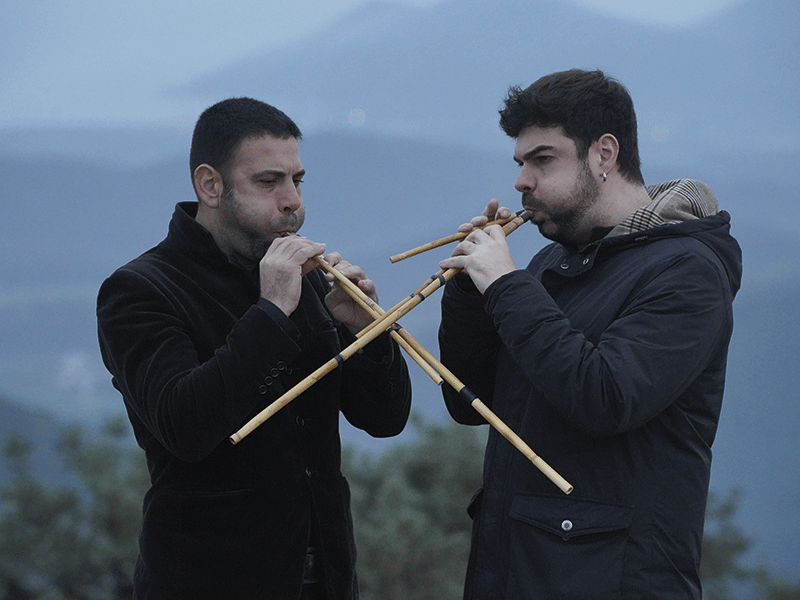
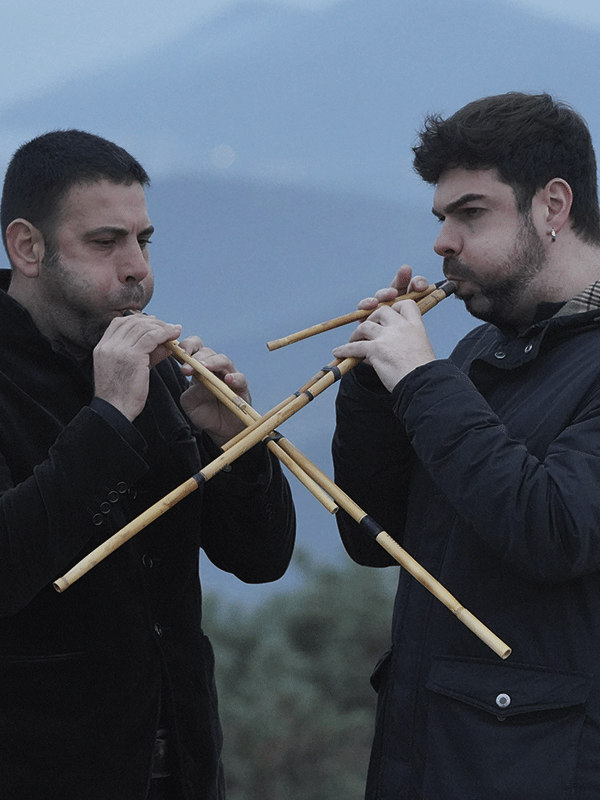
The launeddas are one of Sardinia’s oldest and most fascinating musical instruments, deeply rooted in the island’s tradition and culture. Made up of three pipes, they are played simultaneously thanks to a particular breathing technique that allows for the production of a continuous and magnetic flow of music. In 2006, the Sonus Insulae Sardinia Association was founded in Villaputzu, with the aim of spreading the culture of Launeddas throughout the world. Among the most representative figures stands out Maestro Aurelio Porcu, “Tziu Aurelliu” (1914-2007), a pupil of the brothers Antonio and Emanuele Lara, and of Efisio Melis, who dedicated his life to the study and diffusion of launeddas, taking his music beyond the borders of the island. Porcu has participated in numerous international festivals and collaborated with musicians of various genres, demonstrating that tradition can dialogue with contemporary music, and was an informant for the Danish anthropologist Andreas Fridolin Weis Bentzon. Since 2007, Villaputzu has hosted the Launeddas Festival, an event of great cultural and artistic value, created to promote and preserve this unique intangible heritage. During the Festival, the town comes alive with workshops, concerts, meetings with experts, and launeddas-making and use workshops. The initiative has become an international reference point for lovers of ethnic music and for those who wish to discover the deep soul of Sardinia.