SGT
Sentiero Italia
Stages SI-Z24 and Z25
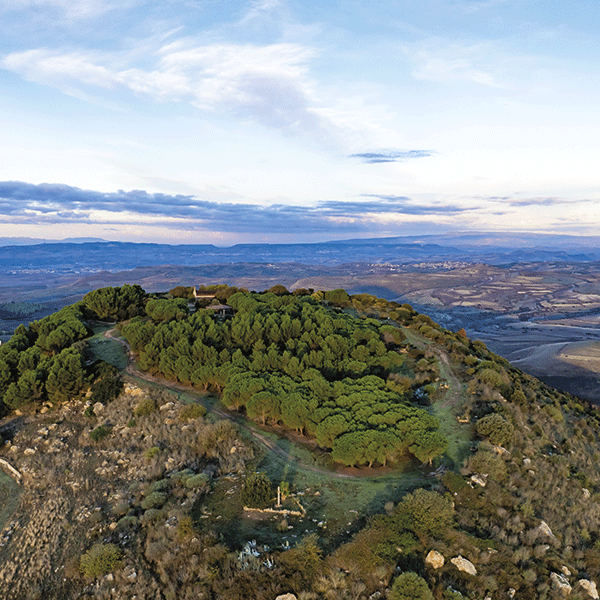
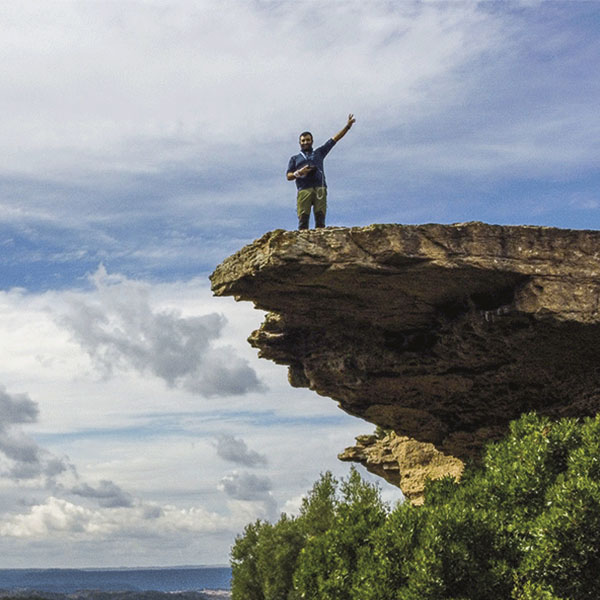
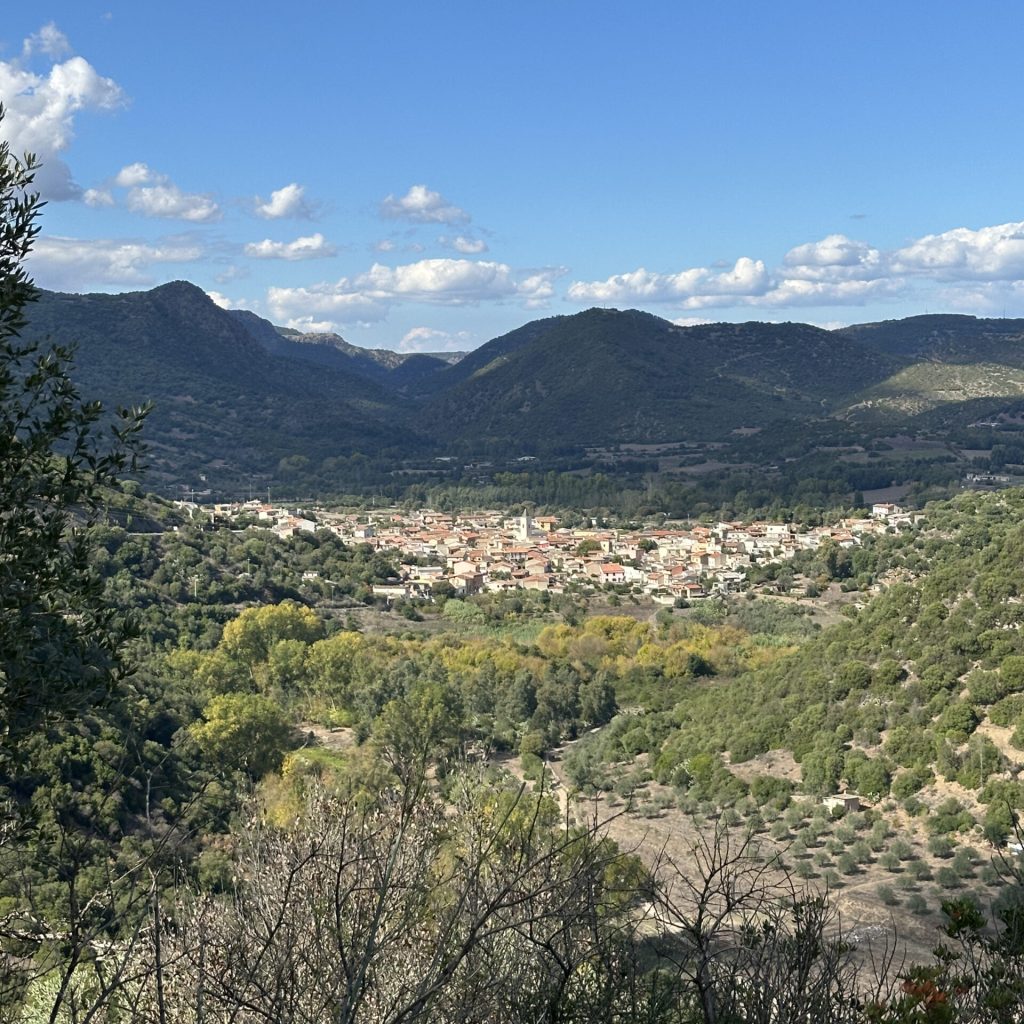
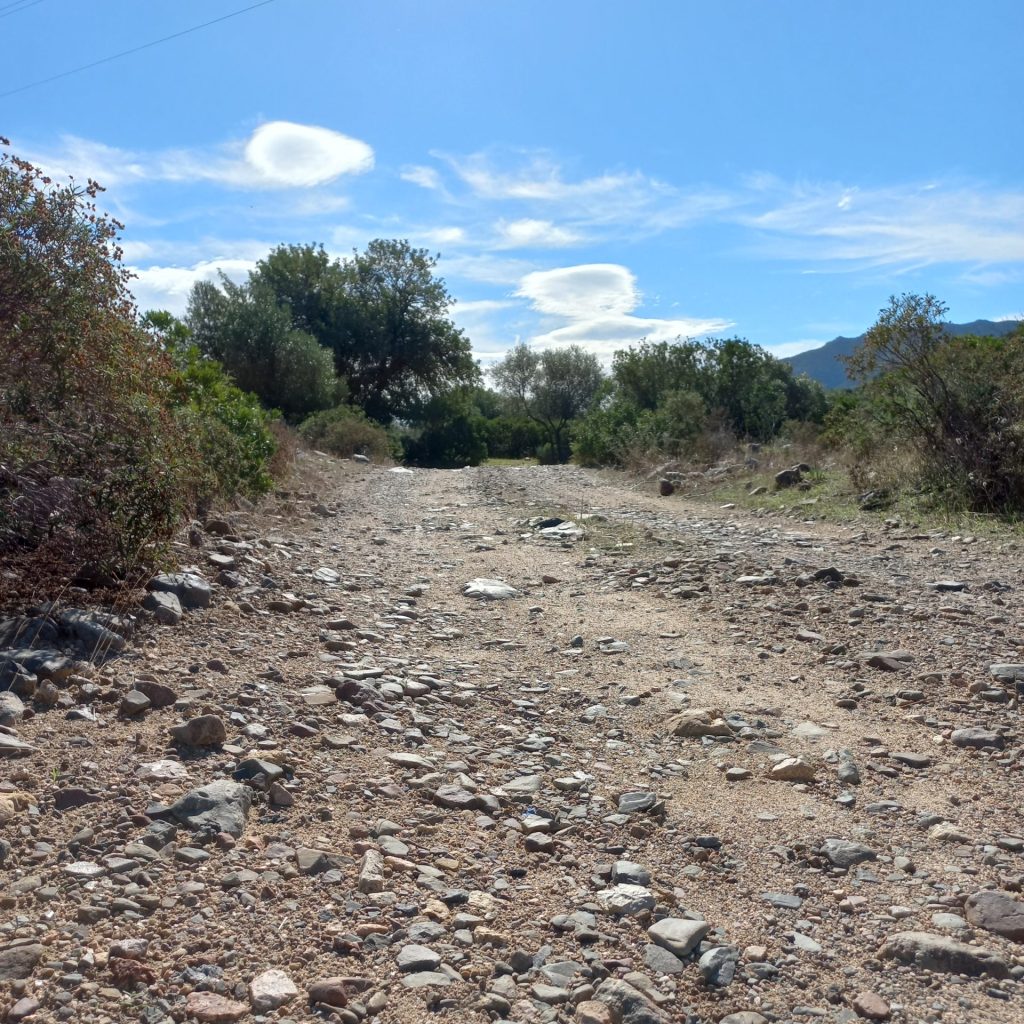
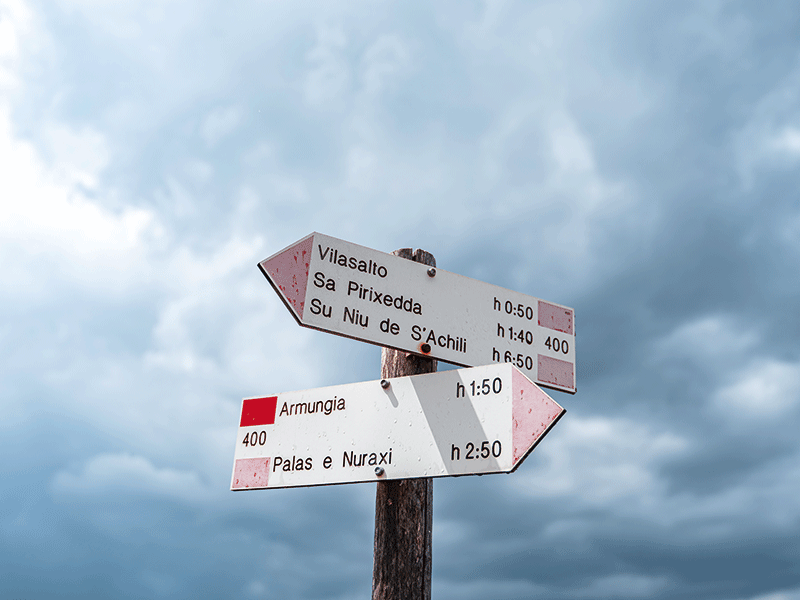
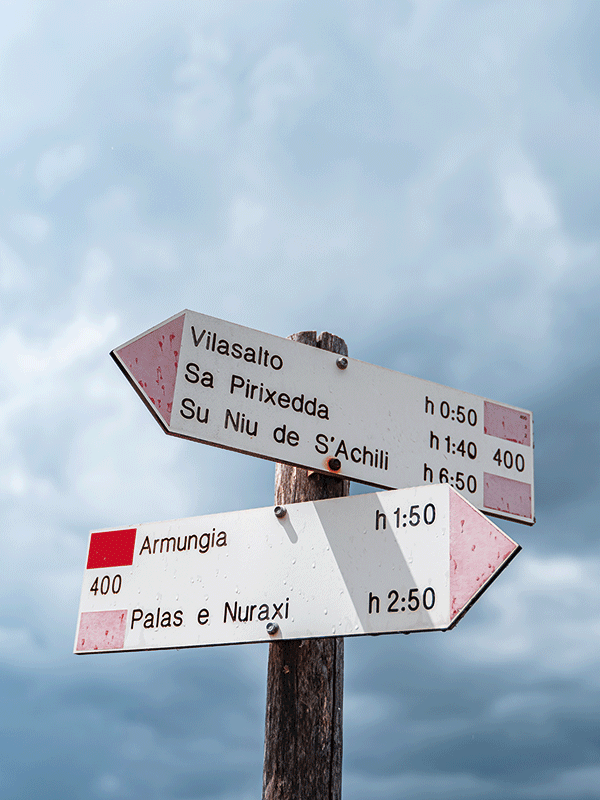
Conceived and promoted by the Italian Alpine Club, the Sentiero Italia CAI is one of the longest hiking trails in the world: over 8,000 km crisscrossing the peninsula, connecting mountains, villages, and landscapes in a journey that highlights little-known areas and promotes slow and conscious tourism. In Sardinia, the Trail winds through 28 stages, from the granite rocks of Limbara to the limestone of Supramonte, crossing the Gennargentu, the Tacchi d’Ogliastra and the forests of Gerrei: this is where the SI-Z24 and SI-Z25 stages, which touch the territory of Armungia, are located. The SI-Z24 stage connects Cuile Is Arrantas (Escalaplano) to Armungia along a route of approximately 23 km along dirt tracks, charcoal burners’ paths and landscapes sculpted by time. The route winds through the shapes of the Sa Mola plateau, runs alongside the Rio Su Ruaxiu and descends towards the Flumendosa valley, until reaching the historic centre of Armungia. Here the path also meets the majestic Nuraghe Armungia (15th-14th century BC), in the heart of the town. The SI-Z25 stage continues for 18 km towards Su Niu ‘e S’Achili, in the territory of San Nicolò Gerrei. Following the 2008 flood, the route was diverted from the Riu Tolu gorge to Laccu Muttaxeddu onto the miners’ road, lined with dry stone walls. The route passes through the Su Suergiu mine and the Tolu river forest, through cool, shady woods.
Museum System
Armungia appears like a true open-air museum, where every corner tells the story of a community. The Armungia Museum System, an integrated journey through identity, memory, tradition, and resistance, is divided into four main hubs: the “Sa Domu de is Ainas” Ethnographic Museum, the Blacksmith’s Workshop, the Emilio and Joyce Lussu Historical Museum, and the Nuraghe Armungia. The ideal starting point is “Sa Domu de is Ainas”, housed in the former 19th-century town hall. Here, around 600 objects tell the story of the local agricultural and pastoral culture through work tools, clothing, household objects and a multimedia section in the “minimal houses”, small stone dwellings. The tour continues in the Bottega del Fabbro, an artisan workshop that has been active since 1928, where the atmosphere of manual labour between forges and grinding wheels can still be felt. The craft room of the ethnographic museum dialogues with this space, in a connection between objects and places. Housed in the Secretary’s House, the heart of the system is the Emilio and Joyce Lussu Historical Museum, which retraces the biographical and political events of the two Sardinian protagonists of the twentieth century. Emilio, founder of the Sardinian Action Party, was a hero of the Great War with the Sassari Brigade, a member of parliament, an anti-fascist in exile, and the author of texts such as A Year on the Plateau and March on Rome and Surroundings; Joyce, a partisan, writer, and cultural mediator, was an interpreter of libertarian thought and the European resistance. The museum preserves letters, films, and editorial materials that demonstrate their profound connection with Armungia and with Italian history.
Nuraghe Armungia
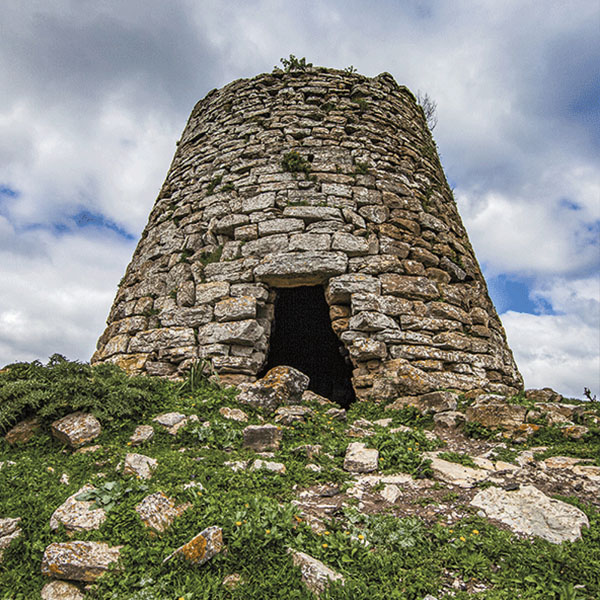
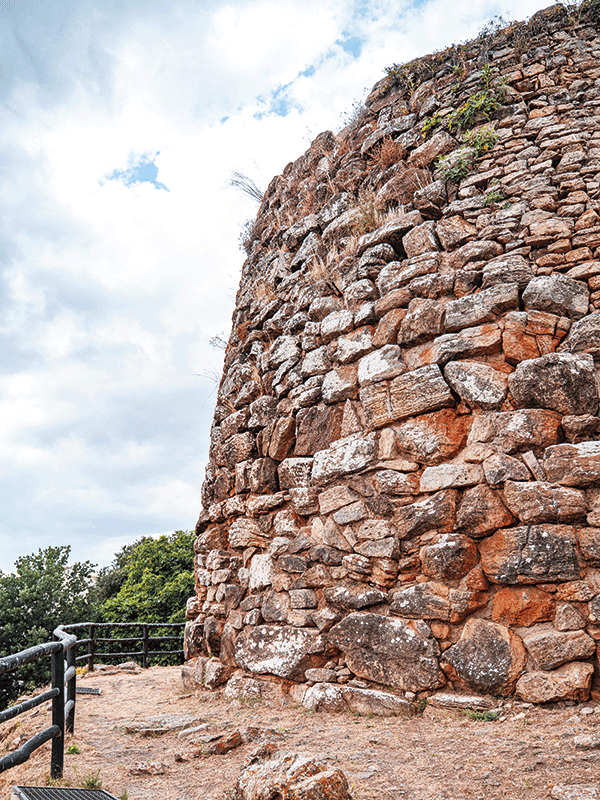
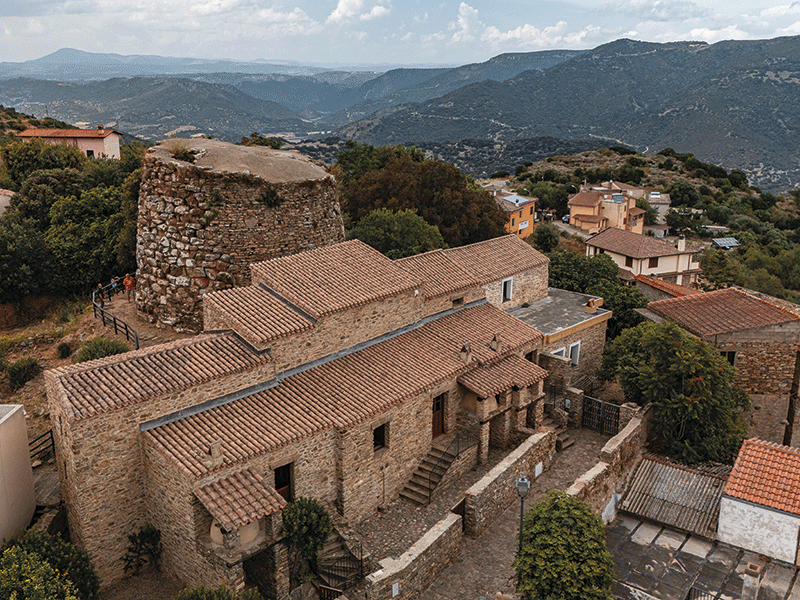
At the highest point of the historic centre, among the stone roofs and narrow streets of the town, stands the Nuraghe Armungia, an integral part of the Armungia Museum System and accessible from the nearby Ethnographic Museum. A rare example of an urban nuraghe, it is incorporated into the modern fabric of the town, testifying to the ancient strategic vocation of the place, with views over the Flumendosa valley up to the peaks of Gennargentu. The nuraghe dates back to the Middle Bronze Age (15th-14th century BC) and has a single-tower plan and a truncated-conical structure made from well-worked blocks of calcareous schist. It measures approximately 12 metres in diameter and retains a residual height of over 10 metres. The interior, accessible from a corridor, leads to a tholos-covered chamber, more than 8 metres high, with two large niches. In 1985, the remains of a Byzantine cistern were discovered, evidence of the building’s reuse in late antiquity and the early Middle Ages. The masonry becomes increasingly precise and proportionate as it climbs towards the top, a sign of the technical skill of the Nuragic people. A modern lighting system enhances the monument even in the evening hours, creating an evocative atmosphere.