SGT
Pranu Muttedu archaeological park
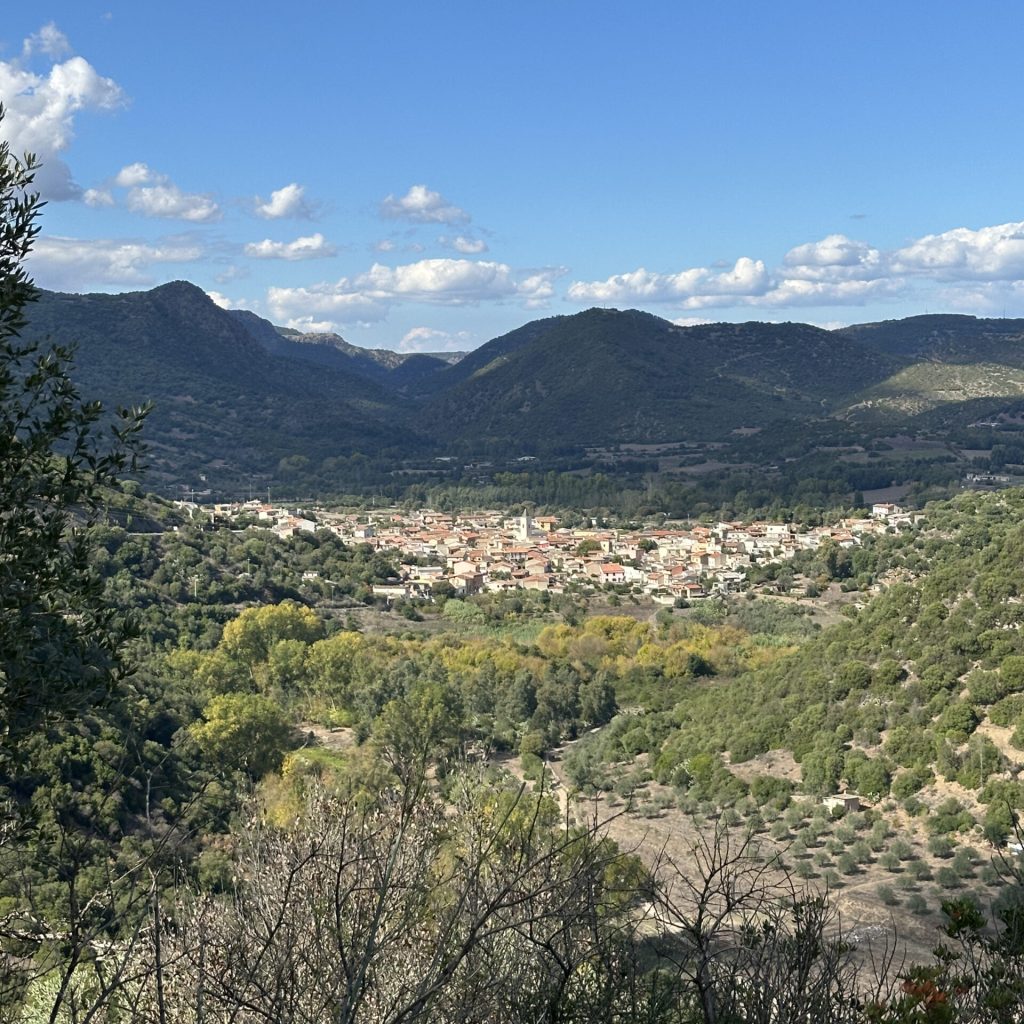
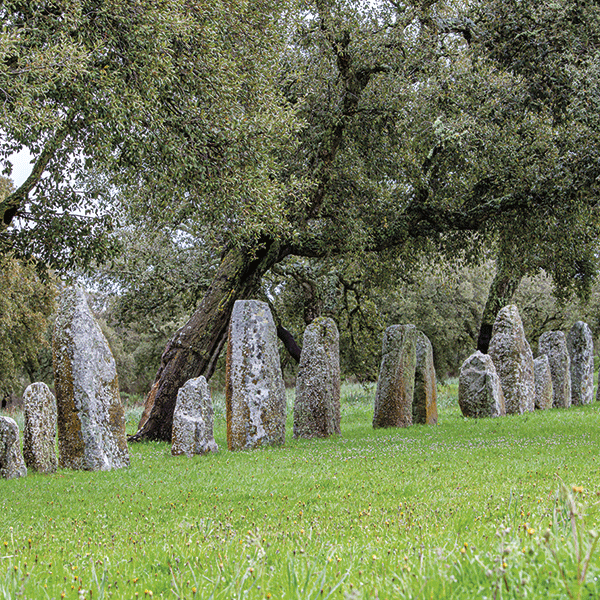
Near the small town of Goni, in the Gerrei region, lies one of the most evocative and mysterious archaeological sites of prehistoric Sardinia. The Pranu Muttedu site extends over approximately 20 hectares on a rocky plateau immersed in a cork oak forest, and its historical and spiritual significance is linked to the highest concentration of menhirs ever documented on the island: there are approximately 60 of them, arranged in pairs, small groups, or long alignments.
The complex, dating back to the late Neolithic (3200-2800 BC) and attributed to the Ozieri culture, is a rare example of a funerary and cult area. The main burials are megalithic tumulus tombs, formed by concentric circles of stones, and domus de janas, hypogea dug into the rock. Among all of them, the monumental tomb II stands out, created using a mixed technique, combining hypogaeum and megalithic elements: consisting of two large blocks excavated to create the funerary antechamber, it was enclosed by a mound and a megalithic circle approximately 30 metres in diameter, with a small menhir at the entrance. The structure, due to its size and refinement, is considered the fulcrum of the sacred area, perhaps intended for a prominent or deified figure. Excavations directed by Enrico Atzeni since the 1980s have brought to light miniature vases, obsidian points, flint blades, and ritual objects, testifying to intense religious activity. Some menhirs have proto-anthropomorphic forms, perhaps linked to divine or heroic figures or simply to the deceased.
Pranu Muttedu, known by many as “the Sardinian Stonehenge,” is a place where nature and history blend harmoniously, offering a deeply immersive experience amid age-old silences and ancient symbols of spirituality.
Domus Suas Complex / Domus de janas Concas de Tziu Peppi or Serrionis / Nuraghe Goni
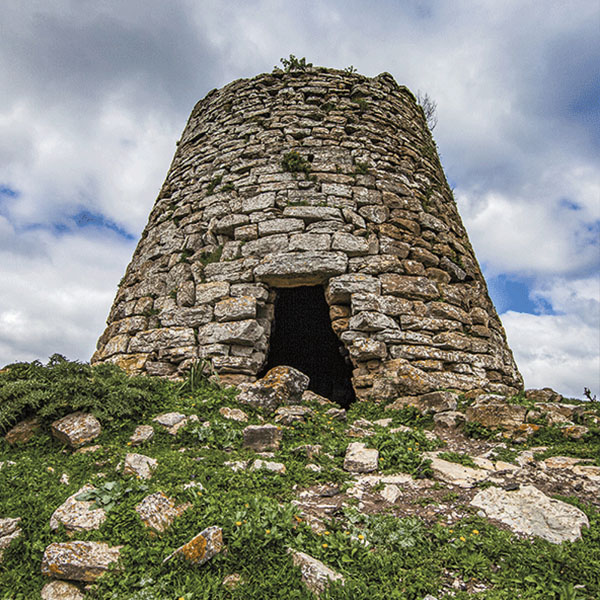
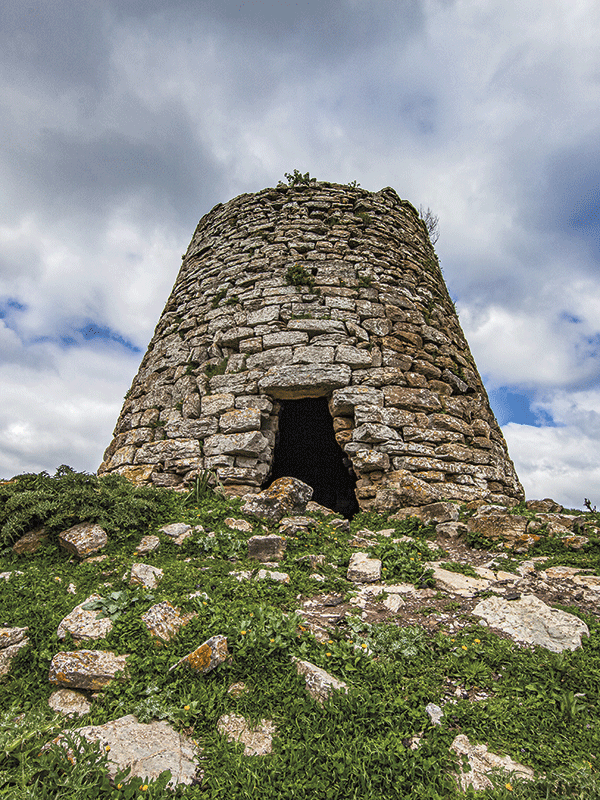
The entire Goni area holds a valuable archaeological heritage, as evidenced by the three sites along the SP23 road towards Lake Mulargia, on an itinerary that combines nature and history. The Domus Suas complex, in direct visual contact with the Goni nuraghe, includes a circular structure of Nuragic tradition, perhaps a corridor nuraghe, flanked by two elongated tombs (allées couvertes) and a giants’ tomb, partly collapsed but still visible in its imposing architecture. With a short climb you reach the domus de janas of Concas de Tziu Peppi or Serrionis, between which a tree has grown and caused a crack in the rock. Excavated around 3500 BC on a 4-metre-high rock outcrop, the two underground tombs have an elevated (epigeal) entrance. Domus 1, on the left, retains two connected rooms; domus 2, on the right, has partially collapsed. The route continues towards the evocative Nuraghe Goni, reachable on foot via a path that climbs the plateau. The nuraghe has a single tower, over 9 metres high, with a still intact tholos chamber. Built of limestone and sandstone, it combines two masonry techniques: rows of large blocks at the base and narrow slabs at the top. From its summit you can enjoy a wide view of the Flumendosa valley and Lake Mulargia.
Graptolite Park
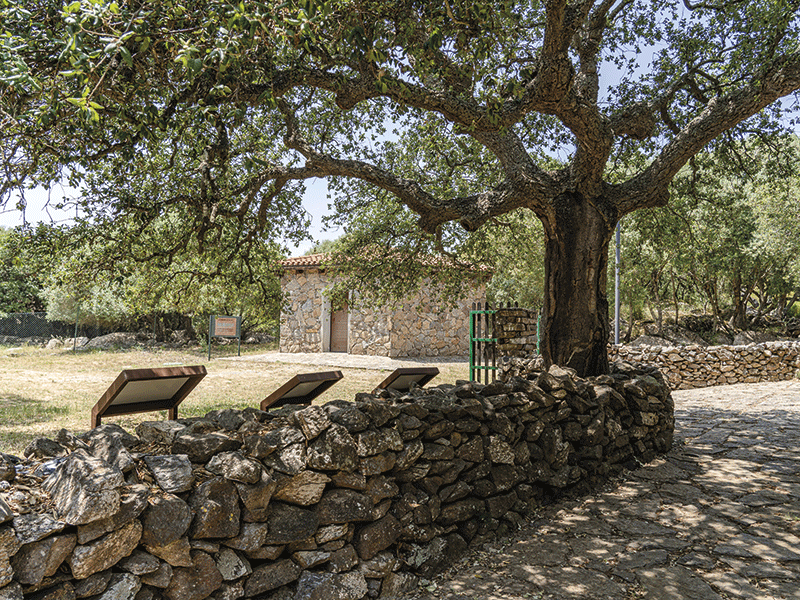
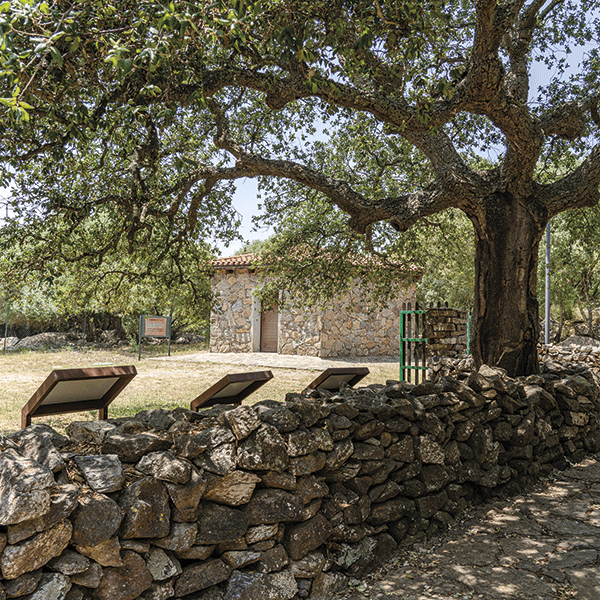
The Graptolite Park represents a unique place in the Sardinian and Mediterranean paleontological panorama. Here, in the schist rocks of the Peinconi area, the fossils of graptolites are exceptionally preserved. These are marine colonial organisms that, over 430 million years ago, floated in the oceans forming branched, ribbon-like structures. Their elongated, silvery, serrated shapes stand out against the dark rock background. Discovered in 1838 by general and naturalist Alberto Ferrero della Marmora, the site was later studied by geologists who placed the fossils in the Middle Wenlockian of the Silurian, making Goni a point of reference for scholars. Graptolites are essential guide fossils for dating geological strata, thanks to their rapid evolution and widespread distribution. The park, part of the Geomineral Historical and Environmental Park of Sardinia, can be visited on foot and offers an immersive experience of geology, nature, and the history of science. A small thematic garden and various installations take visitors on a journey through time, among centuries-old cork oaks and rocks that tell the story of our planet’s evolution.