SGT
Nuraghe Barru
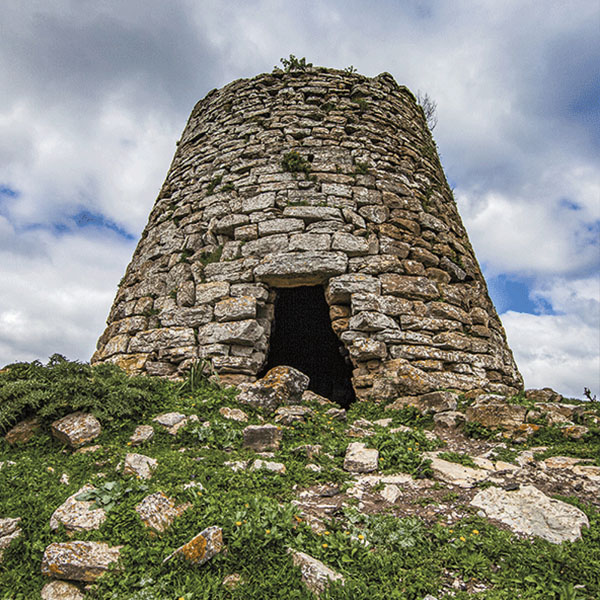
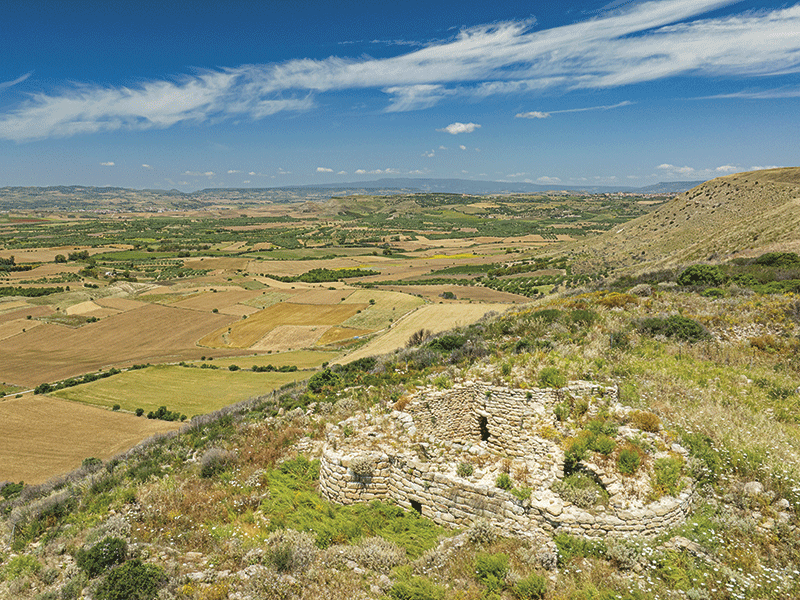
Between the territories of Guasila and Guamaggiore, in the historical region of Trexenta, the Barru nuraghe dominates the landscape from a hill with a wide view of the valley and the nearby villages. Built with precisely squared and arranged limestone blocks, the nuraghe tells a long story of changes, mysteries, and surprising discoveries. Its structure is complex: in the middle stands an elliptical tower with two smaller towers from a later period connected by walls. Together they form an internal courtyard where there is a small room with a well-cistern. It is here that archaeologists have discovered highly valuable finds: decorated ceramics, jugs, bowls, and a bronze votive sword, suggesting the site served a religious purpose. Near the well there is a narrow staircase, hidden for centuries, which led to the upper floors of the nuraghe, where other bronze objects were found, probably deposited during rituals. The presence of silos along the walls suggests that the complex was also a place for storing food, such as grain or legumes.
On the eastern side of the hill you can see the remains of a Nuragic village, still largely unexplored. There are no signs of destruction: perhaps the site was suddenly abandoned, for reasons still unknown.
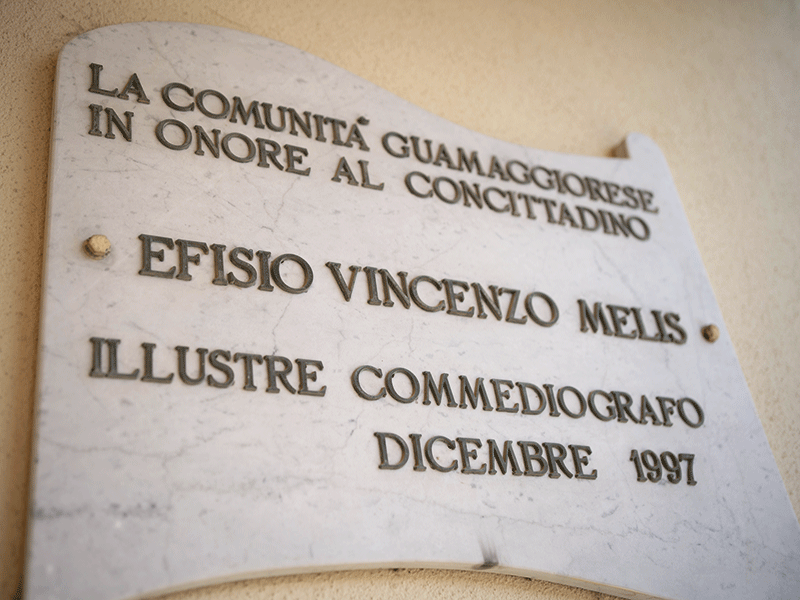
Efisio Vincenzo Melis
Born in Guamaggiore in 1889, Efisio Vincenzo Melis was a mathematics teacher between Sardinia and the Veneto, but he is best remembered as a playwright in the Sardinian language, in the Campidanese variant of Trexenta.
In a short but intense life, he wrote three comedies that are part of the island’s theatrical heritage: Uncle Paddori, Su Bandidori and The Honourable Man at Campodaliga, which remained unfinished due to his death in 1921.
Ziu Paddori, the most famous, was staged for the first time in 1919 in Cagliari with Melis himself on stage, alongside Rachele Piras Medas, founder of the famous Medas Brothers theatrical family. The work won over the public with its irony and topicality. At the centre of the story is Ziu Paddori, a shepherd disoriented by the modern world, an authentic and symbolic figure of rural Sardinia between the 19th and 20th centuries.
The comedy lightly stages the contrasts between city and countryside, between the Island and the “continent”, offering food for thought that is still relevant today. More than a century after its creation, Ziu Paddori continues to live on in the theatre and inspired a recent film with non-professional actors, shot in the historic locations of Trexenta. Director Marco Melis says: “Through the magic of cinema, we tried to take a journey through time to rediscover the customs, traditions, crafts, and stories of our land.”
Monte San Mauro
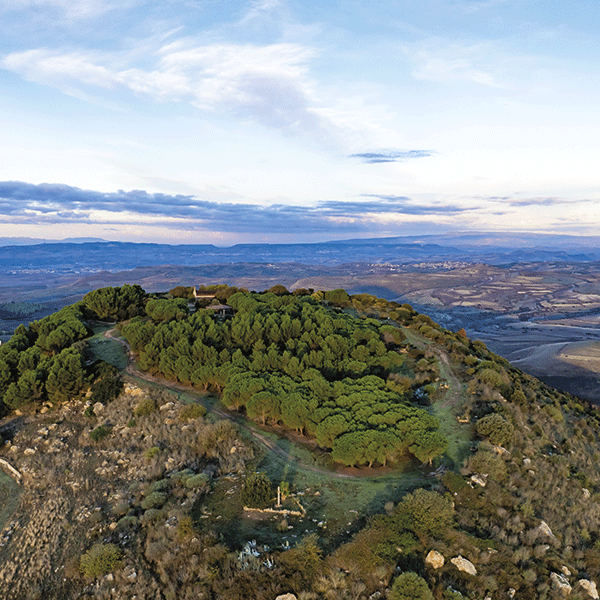
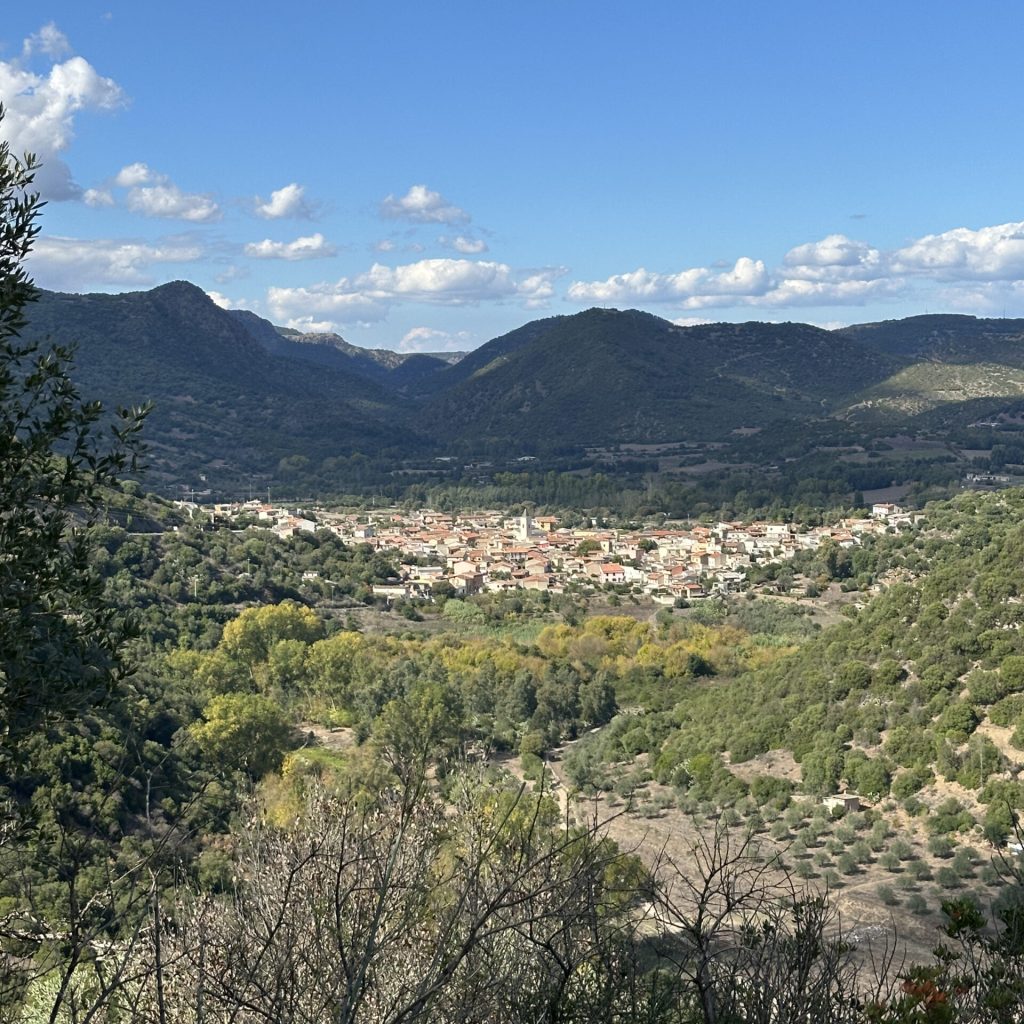
At 501 metres above sea level, Monte San Mauro – also known as Monte Corona – rises in the heart of Trexenta between the municipalities of Gesico, Guasila and Guamaggiore. The area, which extends for 645 hectares, is classified as a Site of Community Interest (SCI) and a Special Area of Conservation (SAC).
The once wooded landscape has been transformed over the centuries by fires, uncontrolled grazing, and logging, giving way to vegetation typical of dry climates, such as the perennial grass, tagliamani.
Today, tree cover is sparse, except for some reforestation, including white poplar. It was precisely during the reforestation work of the 1990s that numerous obsidian artefacts emerged. Traces are visible on the rock face, mainly attributable to the area being inhabited in prehistoric times. On the surface there is a notable dispersion of processing waste and finished tools such as blades and arrowheads: everything suggests that the area was a lithic processing station.
At the top of the hill, in the territory of Gesico, stands the church dedicated to San Mauro Abate, built in 1629. The façade faces west and is surmounted by a bell gable without a bell: the bell was brought especially from the village on the occasion of the feast dedicated to the Saint, on 1st June, and its ringing announced the beginning of the celebrations.