SGT
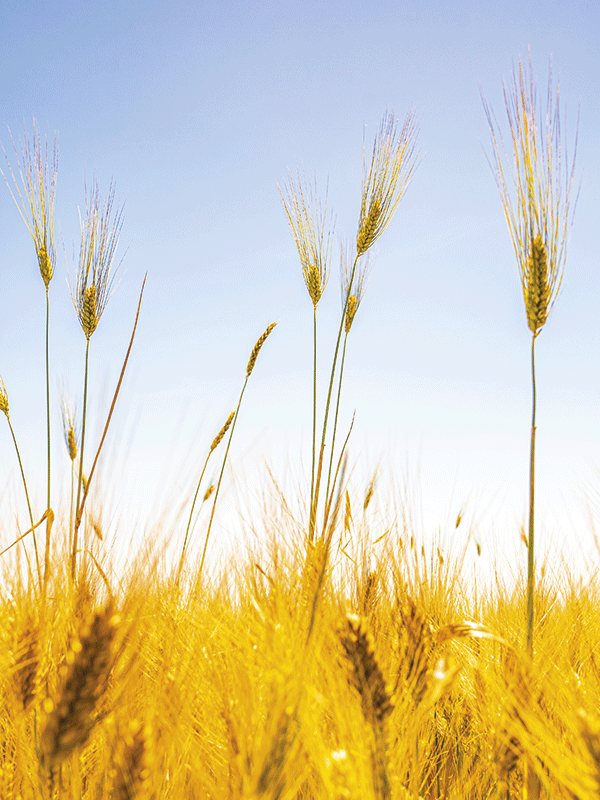
The wheat
Pimentel and wheat: a deep bond, made of work, celebration, and community. Every year, on the last Saturday of August, the town celebrates the Sagra de S’Accodriu, an event that unites the agricultural past with the conviviality of the present. The festival recalls an ancient custom: at the end of the harvest, sharecroppers and farmers gathered to divide the harvest and shared a great banquet to seal their understanding and give thanks for the work done. Today that ritual is renewed with a community lunch where all participants are welcomed with malloreddus, boiled sheep with potatoes and onions (brabei a capottu), roast sausage, cheese, wine, and soft drinks. With folk music, traditional dances, and an entire community celebrating, the festival becomes an experience of sincere sharing, an opportunity to pass down traditions to the younger generation and introduce visitors to Sardinia’s rural soul.
Domus de Janas S’acqua Salida
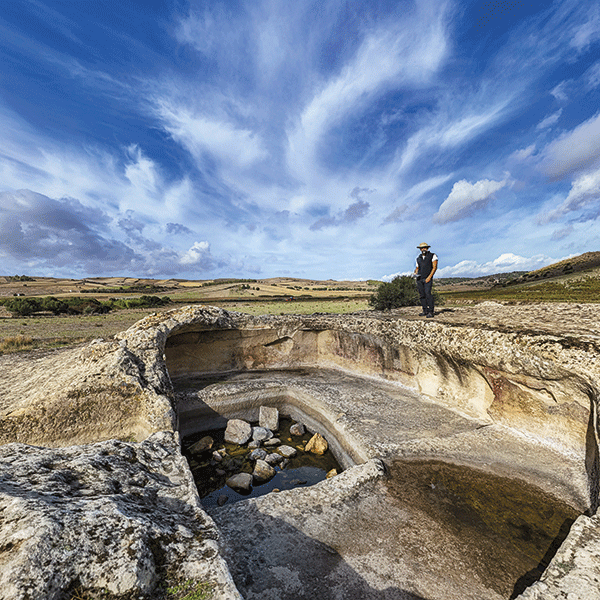
Nestled in the hills of Pimentel, the Domus de Janas of S’Acqua Salida offer a journey through time spanning over 5,000 years. These are ancient rock-cut tombs dating back to the Late Neolithic (3200-2800 BC) and are among the most important examples of prehistoric funerary architecture in Sardinia.
They were discovered by chance in the 19th century, when an explosion in a quarry caused the ceiling of one of the chambers to collapse, revealing ceramics, obsidian and other finds. The necropolis is divided into two groups of tombs. Group A houses Tomb 5, with an 11-metre-long corridor, the longest known on the island. Tomb 2 also stands out, decorated with stylised bull heads painted in red, a symbol of spiritual protection. In the same area, an area with a fireplace and cupels, small cavities dug into the rock for rituals and offerings to the gods. Group B includes three tombs accessible via small wells dug into the stone. Right next to this area there is also a Roman quarry, used to extract stone blocks and slabs, perhaps intended for road construction. The tracks left by the carts are still clearly visible today.
Domus de Janas di Corongiu
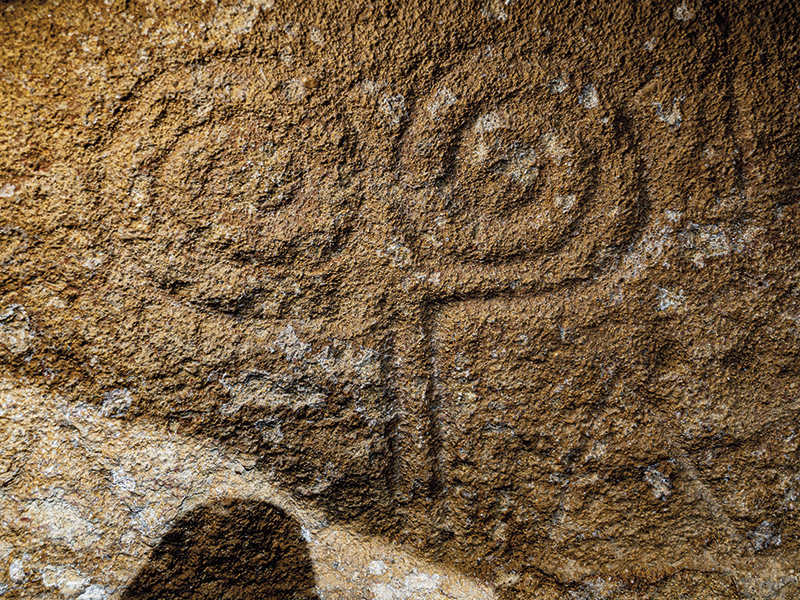
Hidden in the Pimentel countryside is an extraordinarily evocative treasure: the Corongiu necropolis, which takes its name from a lost medieval village. Here is one of the most fascinating domus de janas on the island, not for its size, but for the symbolic richness of its decorations which, after more than 5,000 years, are still visible. The tomb, dug into the sandstone rock, is composed of a vertical shaft, a small antechamber and a burial chamber. The interior walls are embellished with spiral, zigzag, concentric circle and triangle motifs crafted with great precision.
The most fascinating symbol is that of the double spiral, interpreted as the horns of a ram, an animal considered sacred and with an apotropaic function: it kept evil spirits away and protected the deceased on their journey to the afterlife. Similar symbols are found in many other Sardinian necropolises, testifying to a common language and a shared culture already in the Neolithic.