SGT
Wheat Museum
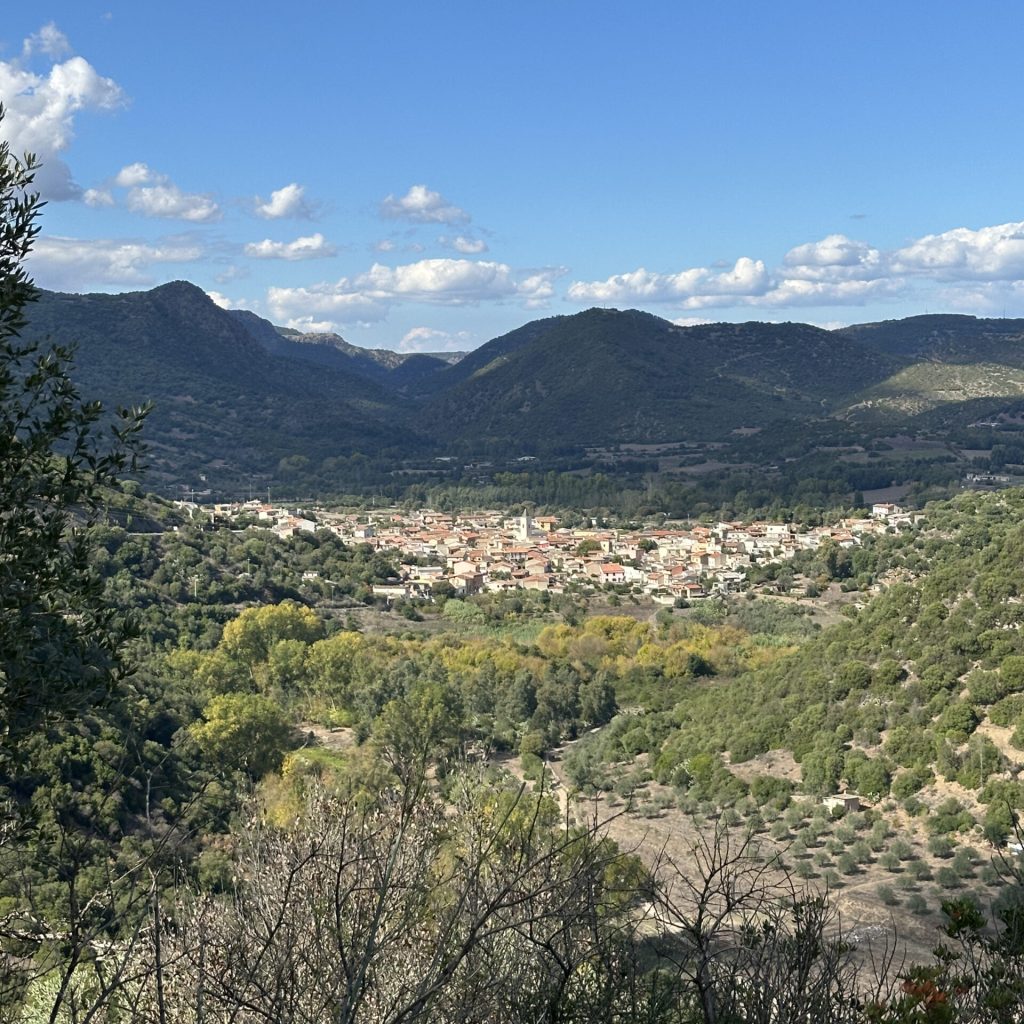
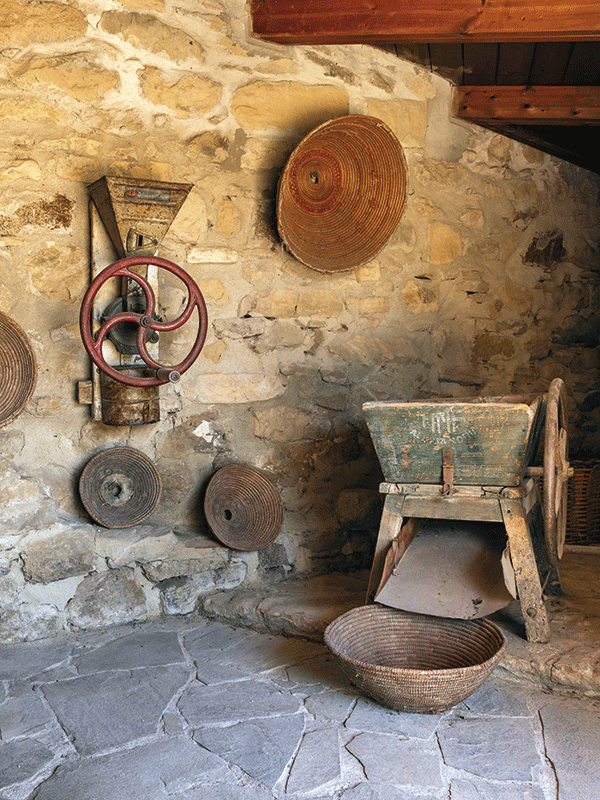
In the heart of Ortacesus, the Wheat Museum tells the story of an ancient and fascinating world: that of the peasant culture linked to wheat, which has shaped life in Trexenta for centuries, one of Sardinia’s granaries since ancient times. One of a kind, the museum is housed in a typical farmhouse with a courtyard that once belonged to the Serra family, where every room retains the authentic flavour of rural life. A peculiarity lies in the division of the museum spaces according to traditional gender roles. On one side, the rooms dedicated to men’s work in the fields, such as sa omu de is ainas, with agricultural tools. On the other hand, the rooms reserved for women’s activities, such as s’omu de su strexu de fenu, where guests were received and the grain was sifted to make bread. Part of the museum tour is dedicated to workshops: here you can knead bread with sourdough starter, fire up the oven, and make su pani pintau or su pani de sa coia, the traditional decorated breads, typical of holidays and weddings. There’s also a space dedicated to handmade pasta, with demonstrations of malloreddus and fregula. The museum is the result of a great collective effort: the inhabitants of Ortacesus and the surrounding villages have donated tools, artefacts, and precious mementos of the rural world. A treasure that is also enriched by the documentary filmed in the 1960s by Danish director Wes Bentzon, which documents the sowing and harvesting of wheat in Trexenta, and by s’omu de tziu Burranca, the room dedicated to Dionigi Burranca, a famous launeddas player who lived in Ortacesus.
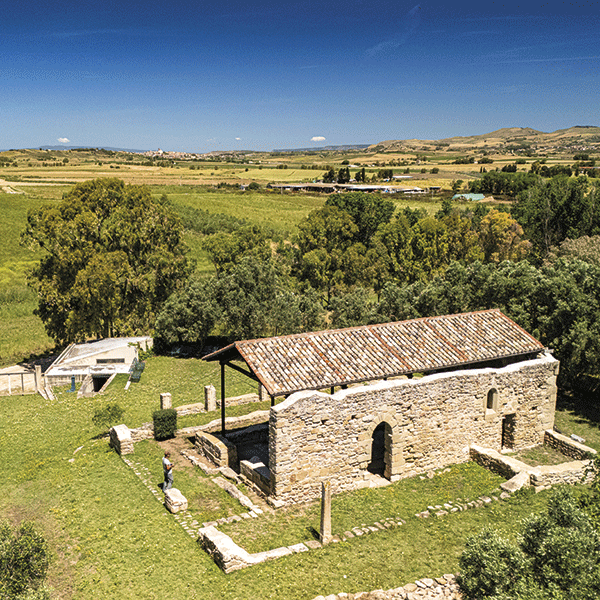
Small Church of San Bartolomeo
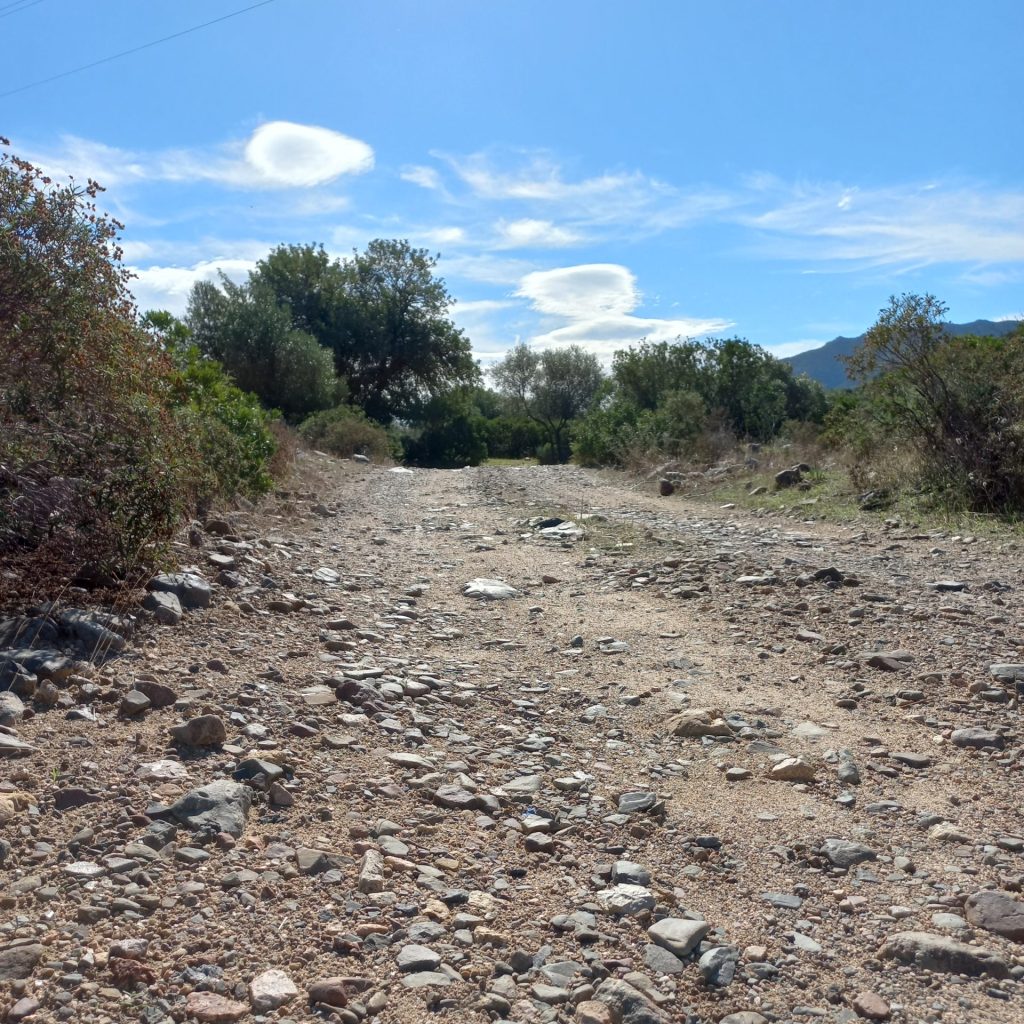
About two kilometers from the village, surrounded by rolling hills, is the country church of San Bartolomeo. Today, solitary in the countryside, it is what remains of the ancient medieval village of Sebera, already mentioned in documents from 1215 and inhabited at least until the 14th century. Of the original Romanesque building, only the right side, part of the rear, and the apse with an elegant round arch remain; restoration work has revealed terracotta floors, tombs, and ancient walls, which tell the story of centuries of history intertwined with spirituality and popular rites. Every year, on 24th August, the community celebrates the feast of Saint Bartholomew here, with a heartfelt procession that renews the bond between memory and faith. The area surrounding the church is of great archaeological interest: on the Bruncu Lau de Sebera hill, in fact, there was a nuraghe; not far away, traces of a Roman and medieval village have emerged.
Punic-Roman Necropolis of Mitza de Siddi
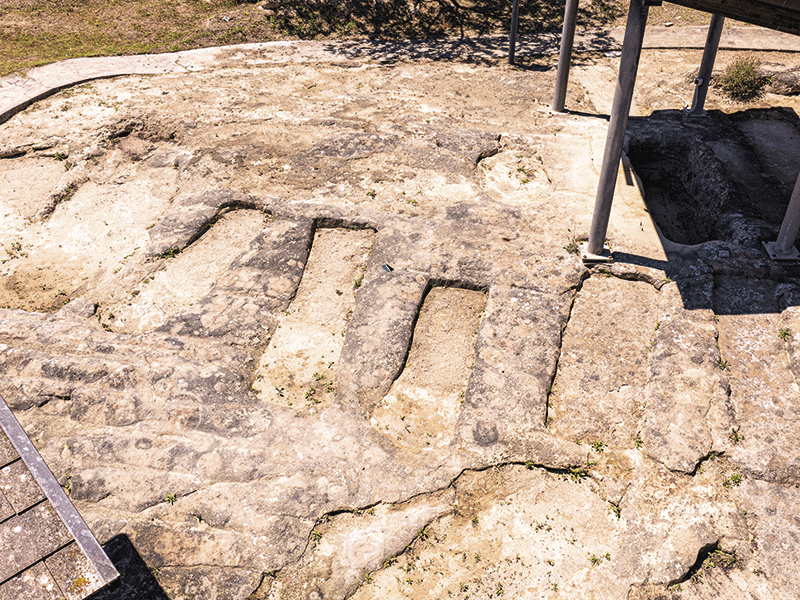
Hidden among the olive groves and vineyards of Ortacesus, there is one of the most important archaeological sites in Trexenta: the necropolis of Mitza de Siddi. Excavations carried out between 1994 and the early 2000s have revealed around 200 tombs dating from the Punic era to the 6th century AD, around fifty of which can be visited along a dedicated trail. The most common are simple pit tombs, dug into the rock, but there are also “Cappuccina” tombs, covered with sloping tiles, and cremation tombs. Also interesting are the tombs with more complex architectural elements: slabs, niches, or reuses of older burials.
Symbolic objects were also found, such as coins placed on the mouth or in the hands, to be used as offerings for the afterlife. The funerary ritual was complex and rich in symbols: the washing and dressing of the deceased, then the public display on the funeral bed, the ritual weeping of the mourners (women charged with lamenting aloud), the procession and finally the burial or cremation. Then there was the ritual banquet, to honour the deceased and strengthen the bond between living and dead people. The necropolis is divided into at least four main nuclei, but there is still a mystery to be solved: the village to which it belonged has not been identified yet.